

Stem Cell Therapies for Liver Disease Treatments like Cirrhosis, Fibrosis, Hepatic Encephalopathy and Chronic Liver Damage

Stem cell therapy offers hope for liver disease by repairing damage, reducing fibrosis, and promoting regeneration: a potential alternative when traditional treatments and transplants fall short.
Stem cell therapy for the liver is an innovative approach that uses regenerative cells to repair damage, reduce scarring, and restore function.
Liver disease affects millions worldwide and remains a leading cause of death. With limited donor organs and rising cases of cirrhosis and liver failure, new solutions are urgently needed. Stem cell therapies offer a promising alternative to transplantation by addressing the root problem: the loss of healthy liver cells.
What is Liver Damage?
Liver damage happens when healthy liver cells are injured and lose normal function. The liver filters toxins, processes nutrients, and supports immunity. When cells in the liver are harmed, these tasks weaken.
Damage may be mild and reversible, such as after short-term alcohol use, or severe and progressive, as seen in chronic conditions. Common causes include viral infections (like hepatitis), alcohol misuse, obesity-related fatty liver disease, certain medications, and exposure to toxins.
If injury continues, liver cells may be replaced by scar tissue, leading to liver fibrosis. Advanced fibrosis develops into cirrhosis, where the organ becomes permanently scarred and loses its ability to regenerate efficiently. Over time, cirrhosis can progress to liver failure or increase the risk of liver cancer.
What are the Stages of Liver Damage?
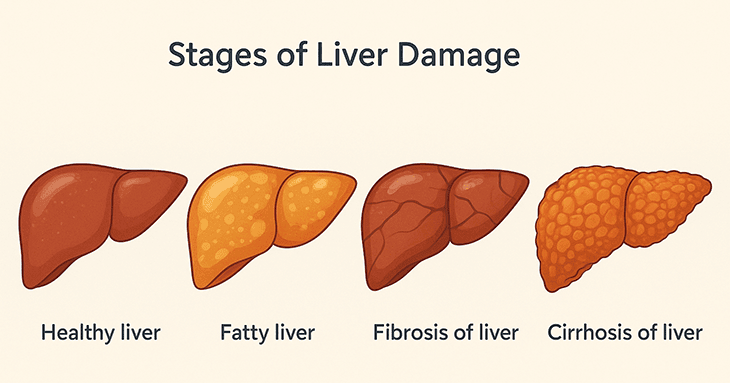
Liver damage progresses through identifiable stages, each showing increasing loss of function:
Healthy Liver: A healthy liver has smooth tissue and normal function. It processes nutrients, filters toxins, produces bile, and regulates metabolism. Cells in the liver regenerate effectively when minor injuries occur.
Fatty Liver (Steatosis): In fatty liver, fat droplets accumulate inside liver cells. Causes include obesity, excessive alcohol, diabetes, and poor diet. Most people show no symptoms at this stage, and the condition is often reversible with lifestyle changes.
Fibrosis of Liver: With ongoing injury, scar tissue begins to form between healthy cells. This stage is called fibrosis. The scarring stiffens the liver and disrupts normal blood flow, but significant function can remain. Early treatment at this stage may still reverse much of the damage.
Cirrhosis of Liver: Cirrhosis is advanced scarring where normal liver tissue is replaced by thick, nodular scar tissue. The organ becomes stiff and shrunken. Symptoms such as jaundice, ascites, bleeding, and fatigue often appear. At this point, regeneration is limited, and patients face risks of liver failure and liver cancer.
What are liver stem cells and how do they differ from hepatic stem cells?
Liver stem cells are broadly defined as stem or progenitor cells that can generate new liver tissue. They include different populations: resident progenitor cells within the liver and external stem cells (such as mesenchymal stem cells or induced pluripotent stem cells) that may be directed to form liver tissue in therapy.
Hepatic stem cells are a more specific category. They are the resident bipotential progenitor cells within the liver, often referred to as oval cells in experimental studies. These cells can differentiate into both:
Hepatocytes, which carry out metabolic and detoxifying functions
Cholangiocytes, which form bile ducts
Key differences:
Scope: “Liver stem cells” is an umbrella term, covering any stem cells with the ability to repair or regenerate liver tissue, including hepatic stem cells and external sources like mesenchymal stem cells.
Origin: “Hepatic stem cells” specifically reside within the liver and serve as its intrinsic repair system.
Potential use: Hepatic stem cells naturally regenerate hepatocytes and bile ducts, while other liver stem cells (like mesenchymal stem cells) are investigated mainly for therapy and regenerative medicine.
What types of cells exist in the human liver and what roles do they play?
The human liver is composed of several cell types that work together to maintain metabolism, detoxification, and repair.
Hepatocytes: Main liver cells that process nutrients, detoxify substances, and produce bile.
Cholangiocytes: Bile duct cells that transport and regulate bile flow.
Kupffer Cells: Resident macrophages that clear bacteria, toxins, and old blood cells.
Stellate Cells: Vitamin A–storing cells that drive fibrosis when activated after injury.
Endothelial Cells: Line liver sinusoids, allowing exchange between blood and liver tissue.
Hepatic Stem/Progenitor Cells: Reserve cells that can form hepatocytes or cholangiocytes during severe injury.
Hematopoietic Stem Cells: Blood-forming stem cells that can migrate to the liver, support immune balance, and aid regeneration.
What are mesenchymal stem cells and what properties make them suitable for liver therapy?
Mesenchymal stem cells (MSCs) are multipotent adult stem cells found in bone marrow, fat tissue, umbilical cord blood, and other sources. They can differentiate into several cell types, including bone, cartilage, fat, and under certain conditions, liver-like cells.
MSCs are considered promising for liver therapy because of their unique properties:
Differentiation Potential
MSCs can be guided to adopt hepatocyte-like functions, supporting replacement of damaged liver cells.Paracrine Effects
Rather than directly replacing cells, MSCs secrete growth factors, cytokines, and extracellular vesicles that:Stimulate liver regeneration
Reduce inflammation
Promote repair of surrounding tissue
Immunomodulation
MSCs regulate immune responses. In liver cirrhosis or autoimmune liver disease, they can suppress excessive immune activity and lower fibrosis risk.Antifibrotic Action
MSCs can slow or reverse fibrosis by inhibiting hepatic stellate cell activation, reducing scar tissue formation.Accessibility and Safety
They are relatively easy to isolate and expand in the lab. Early studies show they can be safely administered to patients with chronic liver disease.
In liver therapy, MSCs are studied as both direct cell-based treatments and as sources of secreted factors that could be developed into regenerative drugs.
What is the role of adult liver stem cells and how do they contribute to liver regeneration?
Adult liver stem cells, often called hepatic progenitor cells (HPCs) or oval cells, are a reserve population within the liver. They remain mostly inactive in healthy conditions but become active when the liver faces severe or chronic injury.
Their role in regeneration includes:
Backup Repair System
When mature hepatocytes cannot divide sufficiently (for example, in cirrhosis or severe hepatitis), adult liver stem cells activate to restore function.
Bipotential Differentiation
These cells can develop into both:
Hepatocytes, which carry out metabolism, detoxification, and protein synthesis
Cholangiocytes, which form bile ducts and transport bile
Bridge to Regeneration
They provide new functional cells during times when the liver’s natural regenerative ability is impaired, sustaining organ activity until recovery or therapy is possible.
Interaction with Other Cells
Adult liver stem cells release signals that influence stellate cells, immune cells, and endothelial cells, helping to coordinate tissue repair and limit fibrosis.
In essence, adult liver stem cells serve as the liver’s reserve engine, stepping in when normal regenerative pathways are overwhelmed.
Why Stem Cell Therapies Matter for Liver Disease
Liver disease is one of the leading causes of illness and death worldwide. Conditions such as:
cirrhosis,
fibrosis,
liver failure,
liver cancer,
result from progressive damage that destroys normal liver cells.
Traditional treatments focus on managing symptoms, slowing progression, or performing a liver transplantation when damage is irreversible. However, donor shortages, transplant rejection, and high costs limit transplantation as a universal solution.
Stem cell therapies offer a new approach because they target the root problem: the loss of functional liver cells. Stem cells have the ability to replace damaged hepatocytes, promote liver regeneration, and reduce fibrosis. They also release growth factors and anti-inflammatory molecules that help restore the liver’s environment, supporting recovery even when scarring is advanced.
Another reason stem cell therapies matter is their versatility. Different types, such as mesenchymal stem cells, hepatic stem cells, and hematopoietic stem cells provide multiple ways to support liver repair. Clinical studies suggest they can improve liver function, reduce complications of cirrhosis, and delay the need for transplantation.
In short, stem cell therapy represents a bridge between supportive care and transplantation, offering patients with chronic liver disease a chance at regeneration rather than replacement.
Why is stem cell therapy for liver disease considered a promising alternative to liver transplantation?
Liver transplantation is the gold standard for end-stage liver disease, but it faces serious limitations. Donor organs are scarce, rejection risks remain high, and patients often require lifelong immunosuppression. These barriers leave many individuals without access to a definitive cure.
Stem cell therapy is viewed as a promising alternative because it offers regeneration instead of replacement. Stem cells can differentiate into hepatocyte-like cells and cholangiocytes, helping rebuild lost tissue. They also secrete growth factors and cytokines that stimulate the liver’s own repair systems, reduce inflammation, and limit fibrosis.
Unlike transplantation, stem cell therapy is less invasive and can be delivered through infusion or localized injection. It may also be repeated multiple times, allowing gradual improvement in liver function. Early trials with mesenchymal stem cells, hepatic stem cells, and hematopoietic stem cells show encouraging results, including improved liver enzyme levels and reduced progression of cirrhosis.
By addressing both cell loss and tissue environment, stem cell therapy has the potential to delay or even replace the need for transplantation in some patients. It represents a bridge treatment for those awaiting a donor organ and a future pathway toward organ regeneration without surgery.
How can cell-based therapies treat liver cirrhosis and liver failure?
Cell-based therapies aim to restore liver function by replenishing lost cells and improving the tissue environment damaged by chronic disease. In cirrhosis, scar tissue replaces healthy liver cells, disrupting blood flow and reducing the liver’s ability to regenerate. In liver failure, vital functions such as detoxification, protein production, and bile secretion collapse.
Stem cell–based approaches offer a way to intervene. Mesenchymal stem cells (MSCs) secrete growth factors and cytokines that reduce inflammation, suppress the activation of stellate cells, and limit scar tissue formation. They also release extracellular vesicles that promote regeneration and improve microcirculation. Hepatic stem cells can directly differentiate into hepatocytes and cholangiocytes, replenishing cell populations needed for metabolism and bile flow. Hematopoietic stem cells contribute by supporting immune balance and enhancing the repair process.
Another therapeutic advantage is that transplanted cells can modify the fibrotic environment. By reshaping the extracellular matrix and stimulating resident cells, they create conditions that allow native liver regeneration. Early clinical studies show that cell infusions can improve liver enzyme profiles, reduce ascites, and enhance overall survival in patients with cirrhosis or partial liver failure.
In essence, cell-based therapies treat cirrhosis and liver failure not just by supplying new cells but also by reversing the hostile environment that blocks recovery, offering a path toward regeneration where conventional medicine has few options.
In what ways can cell therapy for liver fibrosis and cirrhosis reverse tissue damage?
Cell therapy can reverse liver fibrosis and cirrhosis by targeting both scar tissue and the regenerative capacity of the liver. One mechanism is the inhibition of hepatic stellate cells, which are the main drivers of fibrosis. When activated, stellate cells produce excessive collagen and scar tissue. Mesenchymal stem cells (MSCs) release factors that suppress this activation, slowing down or even reversing fibrotic progression.
Another key effect is the remodeling of the extracellular matrix (ECM). Scar tissue disrupts normal blood flow and cell signaling. By releasing enzymes and bioactive molecules, transplanted cells can break down abnormal ECM and encourage healthy tissue architecture to return.
Cell therapy also supports regeneration of hepatocytes and cholangiocytes. Hepatic stem cells and hepatocyte-like cells derived from stem cells can repopulate damaged areas, restoring metabolic and bile functions. This direct replacement of lost cells improves organ performance.
Additionally, infused cells exert immunomodulatory effects. They reduce chronic inflammation, which is a major contributor to ongoing tissue damage, and create a more favorable microenvironment for healing. MSC-derived extracellular vesicles further enhance this process by delivering microRNAs and proteins that promote regeneration and reduce scarring.
Together, these actions mean that cell therapy doesn’t just halt the disease, it actively reshapes scarred tissue, restores cellular balance, and reactivates the liver’s natural repair systems.
How do stem cells promote liver regeneration and reduce fibrosis?
Stem cells promote liver regeneration by supplying new functional cells and by creating a supportive environment for healing. Certain stem cells, including hepatic stem cells, can differentiate into hepatocytes and cholangiocytes. This helps restore the liver’s capacity for metabolism, detoxification, and bile transport when mature cells are lost.
Another important mechanism is the release of paracrine signals. Mesenchymal stem cells secrete growth factors, cytokines, and extracellular vesicles that stimulate native hepatocytes to divide, improve blood vessel repair, and enhance overall tissue regeneration. These secreted molecules also reduce oxidative stress, which often worsens chronic liver injury.
Stem cells also reduce fibrosis by directly influencing hepatic stellate cells, the main producers of scar tissue. They release factors that prevent stellate cell activation, lower collagen production, and encourage scar tissue breakdown. In addition, stem cells modulate the immune system by reducing chronic inflammation, which further limits fibrotic progression.
Together, these effects mean stem cells act in two ways: they regenerate lost liver tissue and they remodel the damaged environment to prevent further scarring. This dual action makes them a central focus in therapies for cirrhosis and chronic liver disease.
Who is the Right Candidate for Stem Cell Therapy for Liver Cirrhosis?
Not every patient with cirrhosis is suitable for stem cell therapy. Clinical studies suggest that the best candidates are individuals with chronic liver disease who still retain some remaining liver function. Patients with compensated cirrhosis or those in the early stages of decompensation often respond better because their liver still has the capacity to regenerate when supported by stem cells.
Patients who are not eligible for immediate transplantation due to age, comorbidities, or lack of available donors may also be considered. Stem cell therapy can serve as a bridge treatment, helping stabilize liver function and improving quality of life while awaiting transplantation.
The right candidate is usually someone with:
Cirrhosis caused by conditions such as hepatitis B, hepatitis C, alcohol-related liver disease, or nonalcoholic fatty liver disease.
Evidence of progressive fibrosis or early complications, but without complete liver failure.
No active uncontrolled infection or cancer, since these can reduce the safety and effectiveness of treatment.
Reasonable overall health to tolerate the procedure.
Exploring Types and Sources of Stem Cells
What are the different stem cell sources used in treating liver conditions?
Stem cell–based approaches for liver disease come from several sources.
Hepatic stem cells are found inside the liver itself and can differentiate into hepatocytes or cholangiocytes, supporting direct organ repair.
Mesenchymal stem cells (MSCs) are obtained from bone marrow, fat tissue, or umbilical cord blood. They do not only differentiate into liver-like cells but also secrete powerful growth factors that encourage regeneration and reduce inflammation.
Hematopoietic stem cells, which normally give rise to blood and immune cells, can migrate to the liver and help modulate immune responses, indirectly supporting repair.
Induced pluripotent stem cells (iPSCs) are engineered from adult cells and reprogrammed to generate hepatocyte-like cells for research and potential therapies. Each source offers different strengths for treating liver conditions.
What is mesenchymal stem cell therapy and how does it differ from other stem cell therapies?
Mesenchymal stem cell therapy relies on the use of MSCs to treat liver disease. These cells are attractive because they are easy to harvest, expand well in culture, and can be delivered safely by infusion.
Unlike hepatic stem cells, which primarily serve as a direct backup within the liver, MSCs act through paracrine effects: they release growth factors, cytokines, and extracellular vesicles that reduce inflammation, suppress stellate cell activation, and promote regeneration of native hepatocytes.
They differ from induced pluripotent stem cells, which focus more on creating replacement hepatocytes in the lab. The main distinction lies in MSCs’ ability to influence the liver microenvironment as much as, or more than, their direct differentiation into liver cells.
How do hepatic stem cell types compare to mesenchymal stem cells in liver disease treatment?
Hepatic stem cells are resident bipotential progenitors inside the liver. They directly generate hepatocytes and cholangiocytes when severe injury prevents mature cells from dividing. Their role is intrinsic regeneration.
Mesenchymal stem cells, in contrast, are sourced from outside the liver and influence repair indirectly. They release anti-inflammatory and antifibrotic factors, reshape the extracellular matrix, and enhance the activity of native regenerative pathways. While hepatic stem cells provide replacement cells, mesenchymal stem cells provide environmental support.
In practice, therapies may combine both strategies: one to supply new functional cells and the other to create conditions that favor recovery.
How are cell-based therapies for liver diseases developed using mesenchymal stem cells?
Cell-based therapies using mesenchymal stem cells are developed through two main pathways. In the first, MSCs are isolated, expanded in the laboratory, and then infused into patients with liver disease. These cells migrate to injured liver tissue, where they secrete regenerative and antifibrotic factors.
In the second approach, researchers focus on MSC-derived products such as extracellular vesicles or conditioned media, which contain the same healing molecules without the need to transplant whole cells.
Both methods aim to restore liver function, reduce scarring, and delay or prevent the need for liver transplantation. Clinical trials are ongoing to refine the best delivery methods, dosing, and long-term outcomes.
Mechanisms of Action
How do stem cells work to treat liver disease at the cellular level?
Stem cells contribute to liver repair through two main actions: direct cell replacement and indirect support of the liver environment. Some stem cells, such as hepatic stem cells or induced pluripotent stem cells, can differentiate into hepatocytes and cholangiocytes, providing new cells to replace those lost through injury.
Others, like mesenchymal stem cells, primarily act through paracrine signaling. They release growth factors, cytokines, and extracellular vesicles that reduce inflammation, improve blood supply, and stimulate the liver’s own regenerative pathways. Together, these effects restore liver function at the cellular level.
How do stem cells drive liver regeneration and repair?
Stem cells drive regeneration by creating new hepatocytes and supporting the growth of bile duct cells. Mesenchymal stem cells enhance this process by encouraging surviving hepatocytes to divide and by protecting them from oxidative stress.
They also promote angiogenesis, which improves the delivery of oxygen and nutrients to regenerating areas. Hepatic stem cells directly supply new functional tissue when mature hepatocytes cannot keep pace with damage. This coordinated activity ensures that the liver can rebuild both structure and function.
How do stem cells modulate immune response in liver cirrhosis and fibrosis?
Chronic inflammation fuels cirrhosis and fibrosis. Stem cells, particularly mesenchymal stem cells, help restore immune balance by suppressing excessive immune reactions and promoting regulatory immune cell activity.
They reduce the production of inflammatory cytokines, which are proteins that drive tissue damage, and they promote the release of anti-inflammatory molecules. By calming the immune environment, stem cells prevent further injury and create the conditions necessary for healing.
What role do stem cell therapies have in reducing liver inflammation and fibrosis?
Stem cell therapies reduce inflammation and fibrosis through multiple pathways. They block the activation of hepatic stellate cells, the primary drivers of scar tissue formation.
They secrete antifibrotic factors that break down excess collagen and remodel the extracellular matrix, allowing normal blood flow and cell signaling to return. At the same time, their anti-inflammatory effects limit ongoing injury.
This combination of antifibrotic and regenerative actions allows stem cell therapies to slow, halt, or even partially reverse the progression of cirrhosis.
Clinical Applications and Treatments
How are stem cell therapies being applied to treat liver cirrhosis clinically?
Stem cell therapies are being tested as a supportive treatment for patients with liver cirrhosis who are not eligible for transplantation. Clinical trials focus on infusing mesenchymal stem cells derived from bone marrow, adipose tissue, or umbilical cord blood into the bloodstream or directly into the portal vein.
These cells travel to the injured liver, where they release factors that reduce inflammation and fibrosis while stimulating regeneration. Early studies report improved liver function tests, reduced fluid accumulation, and better quality of life. Stem cell therapy shows promise as a way to stabilize cirrhosis and delay disease progression.
What clinical evidence exists for mesenchymal stem cells in treating liver cirrhosis?
Several early-phase clinical trials have tested mesenchymal stem cell therapy in cirrhosis patients. Results suggest improvement in biochemical markers such as alanine aminotransferase (ALT), aspartate aminotransferase (AST), and bilirubin levels.
Some trials also report a reduction in ascites and improved Child-Pugh and MELD scores, which measure liver disease severity.
Importantly, these studies indicate that MSC infusion is generally safe and well tolerated, with no major adverse events. While long-term outcomes remain under investigation, current evidence supports the therapeutic potential of MSCs in advanced liver disease.
Reference Clinical Trials:
A Clinical Study to Evaluate the Safety and Efficacy of Mesenchymal Stem Cells in Liver Cirrhosis
Mesenchymal Stem Cells for the Treatment of Liver Disease: Present and Perspectives
What are the current methods of cell therapy delivery for liver treatment?
Different methods are being tested to deliver stem cells effectively to the liver. The simplest approach is intravenous infusion, which is safe and minimally invasive.
However, some cells may be trapped in the lungs before reaching the liver. Direct injection into the hepatic artery or portal vein improves targeting, ensuring that more cells reach the damaged tissue.
In experimental settings, scaffolds or biomaterials are used to deliver stem cells locally, providing structural support for engraftment. Researchers are also exploring the use of extracellular vesicles derived from stem cells, which carry regenerative molecules without requiring whole cell transplantation.
How effective and safe are mesenchymal stem cells for liver cirrhosis in trials?
Clinical studies suggest that mesenchymal stem cells are safe, with few side effects reported.
The most common reactions are mild, such as fever or local discomfort at the infusion site.
Effectiveness varies, but many trials show improved liver function and stabilization of cirrhosis progression. Some patients experience reduced portal hypertension and fewer complications of end-stage liver disease.
Frequently Asked Questions
Can stem cells repair your liver?
Yes, stem cells can support liver repair by replacing damaged cells and stimulating the organ’s natural regeneration. Mesenchymal stem cells also release anti-inflammatory and antifibrotic factors that reduce scarring and improve function.
Which cells help in liver regeneration?
Liver regeneration is driven mainly by hepatocytes, which divide to replace lost tissue after injury. When this capacity is overwhelmed, hepatic stem cells activate to form both hepatocytes and bile duct cells. Mesenchymal stem cells also support regeneration indirectly by reducing inflammation, limiting fibrosis, and releasing growth factors that aid repair.
What is the success rate of stem cell therapy for cirrhosis?
In the case of cirrhosis onset and the early diagnosis of hepatic failure, over 95% success rate is achieved, and this rate decreases to 20% when the disease progresses.